Buy seniorenbegleitung.eu ?
We are moving the project
seniorenbegleitung.eu .
Are you interested in purchasing the domain
seniorenbegleitung.eu ?
domain@kv-gmbh.de · 0541-91531010
Buy seniorenbegleitung.eu ?
Is a 12-year-old Chianti still drinkable?
Yes, a 12-year-old Chianti can still be drinkable, especially if it has been stored properly in a cool, dark place. Chianti is a red wine that is known for its aging potential, and many Chianti wines can continue to develop and improve in flavor over time. However, it's important to note that not all Chianti wines are meant for long-term aging, so it's best to consult with a wine expert or sommelier to determine if a specific bottle of Chianti is still drinkable after 12 years. **
What is senior care?
Senior care refers to the support and assistance provided to elderly individuals who may need help with daily activities, medical care, or emotional support. This can include services such as in-home care, assisted living facilities, nursing homes, and memory care for those with dementia or Alzheimer's. Senior care aims to help older adults maintain their independence and quality of life while ensuring their health and safety needs are met. It can also involve providing companionship and social interaction to combat feelings of isolation and loneliness. **


Similar search terms for Chianti
Top-Angebote
Products related to Chianti:
-
Chianti Classico Brancaia 2024The Chianti Classico is the symbolic wine of Cantina Brancaia, the one that best represents the tradition of this historic territory of Tuscany, long devoted to viticulture. A medium-bodied red, fresh and pleasant, particularly versatile at the table, appreciated for its expressive immediacy and its faithful territorial connotation. The Sangiovese grape and the lands of Chianti form, in fact, an indissoluble historical bond, deeply linking this red berry variety, typical of central Italy, with the beautiful hilly area between Florence and Siena. The Sangiovese grapes of Chianti Classico come from Tenuta Brancaia, located in the municipality of Castellina in Chianti, in the heart of the Classica area of the Denomination. The vineyards are cultivated in a magnificent hilly area at an altitude of 200/250 meters above sea level, with a south, southeast exposure. The Sangiovese plants are trained to a spurred cordon, with a density of 5,680 vines per hectare, planted in deep soils, composed equally of sand, silt, and clay. After the manual harvest, the grapes are sent for fermentation in stainless steel tanks at a controlled temperature of 28/30 °C with maceration on the skins for about 10/13 days. After the racking, the Sangiovese ages for a period of 12 months, for 2/3 in stainless steel tanks and for 1/3 in cement, in order to preserve its typicity and varietal fragrance. Before being marketed, it completes the aging with a few months in bottle. The Brancaia label was born from the desire to produce a red capable of expressing the great tradition of the territory, enhancing the authentic characteristics of a great grape like Sangiovese. The choice not to use wood for aging immediately declares the intent to preserve the qualities of a high-quality raw material. The color is a beautiful bright and luminous ruby red. The bouquet is characterized especially by the fresh fragrance of the aromas, ranging from delicate floral notes to cherry, marasca, and ripe red berry fruit, up to slight spicy nuances. The attack on the palate is lively and pleasant, with juicy fruit, fine tannins, and great drinkability. The finish is fresh and savory, with good final persistence. At the table, it pairs best with local cuisine, from first courses with meat sauces to mixed grills.17,00 £*Shipping: 48,00 £Secure redirect to the provider
-
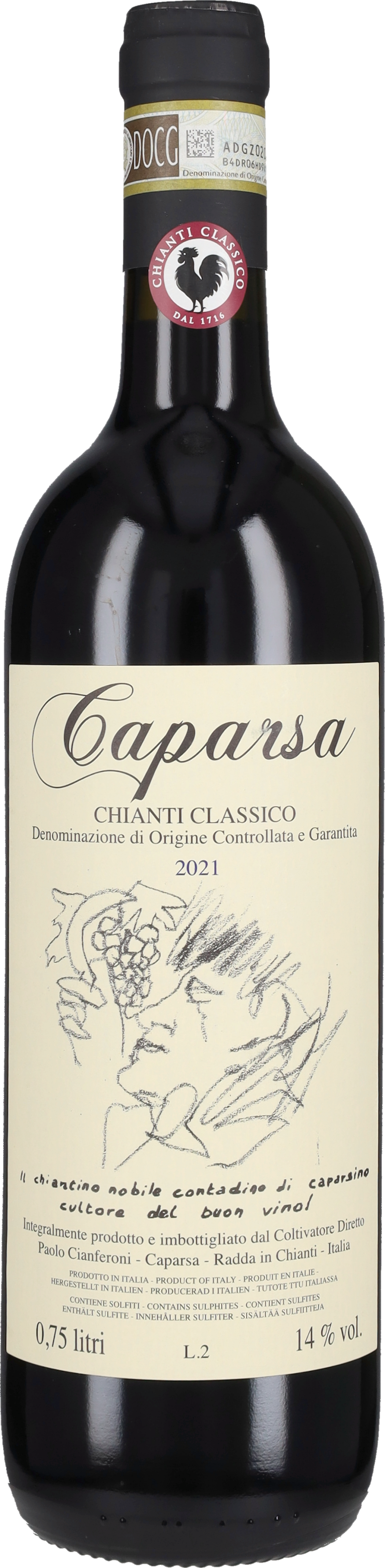
Chianti Classico Caparsa 2022Caparsa presents its Chianti Classico, a slender and meaty label that authentically expresses the famous territory from which it comes. The family-run winery Caparsa, located in Radda in Chianti, passionately manages about 12 hectares of vineyards, certified organic and almost exclusively cultivated with Sangiovese, the principal grape variety of the area. The production is characterized by a traditional and genuine style, as well as by its artisanal character and exemplary typicity. The evocative tasting room is carved out of the old cellar from the 1600s, just as the very old underground room dedicated to wine aging is. The Caparsa Chianti Classico represents a pure expression of Sangiovese, grown in Radda in Chianti at 450 meters above sea level. The harvest is done by hand and in the vineyard, practices required by certified organic farming are adopted. The alcoholic fermentation is carried out by the only yeasts naturally present on the grapes and in the cellar environment and takes place in cement tanks. In the same type of containers, the aging of some takes place.months, before bottling. Caparsa Chianti Classico DOCG has a ruby red hue with violet reflections. The aromas on the nose evoke sensual notes of violet, wild berries, cherry, morello cherry, and underbrush, blending with hints of iron. The taste is dynamic and pure, made very smooth by the crisp freshness that accompanies the pleasant mineral perceptions. A bottle that stands out for its accessibility and spontaneity, to be enjoyed with aged cheeses and cured meats or assorted red meat dishes.34,00 £*Shipping: 48,00 £Secure redirect to the provider
-
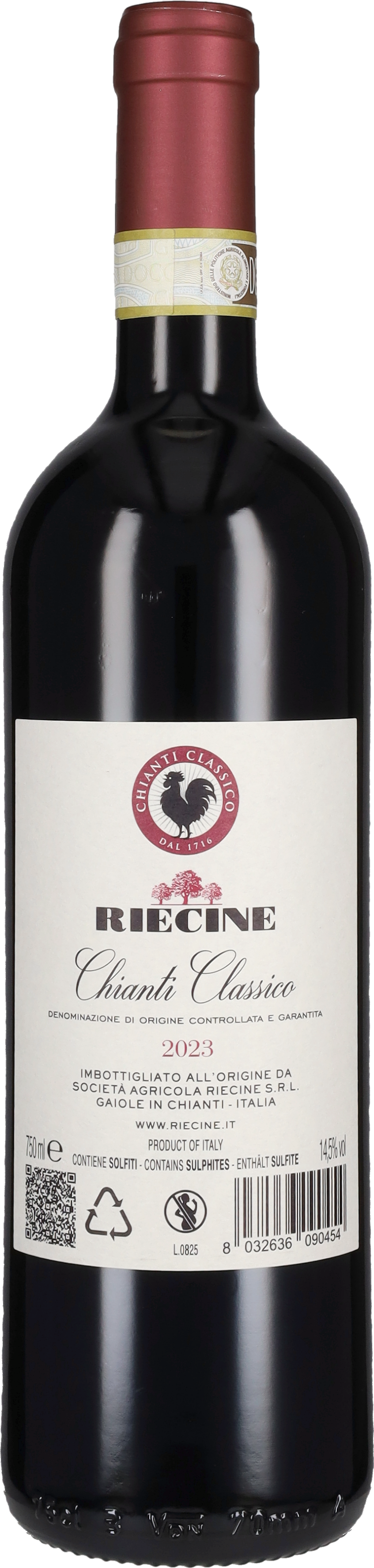
Chianti Classico Riecine 2024Chianti Classico from the Riecine estate takes the form of a typical and representative interpretation of this celebrated appellation that has strongly contributed to defining the image of oenoic Tuscany in the world. We are in Gaiole in Chianti, a subzone of Chianti Classico that, along with Radda and Castellina, is considered the most anciently devoted to viticulture. This area, included in the centre of a natural basin at the foot of the Chianti Mountains, is one of the coolest in the entire Black Rooster appellation, included among the 11 Additional Geographical Units. Riecine Chianti Classico constitutes an expression of pure Sangiovese, a black grape variety grown under a certified organic system. The vines are approximately 25-35 years old and are rooted in soils consisting mainly of limestone and clay between 450 and 500 meters above sea level. Harvesting is done by hand generally between September and October, accompanied by double selection, both in the vineyard and in the cellar. The clusters are then mellowed in unglazed concrete tanks for alcoholic fermentation, accompanied by 15 days of maceration on the skins. The ensuing ageing phase takes place in spent tonneaux and continues for one year before bottling and further brief resting in a glass. Chianti Classico Riecine has a pale ruby red color. Seductive and characteristic aromas of red fruits and violets define the olfactory landscape, along with delicate spicy tones. The sip is voluminous, broad and round, well balanced by marked freshness and a pleasantly tannic finish. Thanks to its remarkable territorial adherence, this Chianti Classico pairs beautifully with traditional Tuscan dishes such as pici with chianina ragu.25,00 £*Shipping: 48,00 £Secure redirect to the provider
-
Chianti 'Castiglioni' Frescobaldi 2025The Chianti “Castiglioni” from the Frescobaldi winery is a light and delicate red wine produced in the Tenuta Castiglioni, on the gentle hills of Val Pesa southwest of Florence. The pedoclimatic characteristics of this area, which enjoys a warm and dry microclimate, with afternoon breezes coming from the Tyrrhenian Sea refreshing and aerating the grapes, make this wine soft, pleasantly fruity, and with a well-defined character. The “Castiglioni” is obtained from a blend of predominantly Sangiovese grapes and Merlot from vineyards of different ages cultivated with great attention to the territory and quality. The winery, with over 700 years of history, is one of the most important wine realities not only in Tuscany but in the whole world, having represented for centuries a reference point on the tables of royal families and high ecclesiastical offices. Marchesi de’ Frescobaldi today consists of 1200 hectares of property, divided into various estates and ancient castles, all dedicated to the production of excellence. The “Castiglioni” Chianti from Frescobaldi is obtained from grapes harvested towards the end of September. The grapes, once destemmed and crushed, are fermented separately, based on the grape variety, in stainless steel containers at controlled temperature with maceration on the skins for about 11 days. Immediately after alcoholic fermentation, malolactic fermentation takes place, after which the wine is racked and refined. The wine remains to age in separate stainless steel containers, with micro-oxygenation, until the blending moment, after which it is bottled and remains to mature for another month before being put on the market. The Chianti “Castiglioni” presents itself with an intense ruby red color with purple hues, a sign of youth. On the nose, aromas of red fruit appear, including marasca and wild strawberry, floral notes of violet and Mediterranean herbs. On the palate, it is soft, fresh, clear with a good fruity persistence. A pleasant red, cheerful and suitable for everyday consumption.8,00 £*Shipping: 48,00 £Secure redirect to the provider


-
What is elderly care?
Elderly care refers to the support and assistance provided to older adults who may need help with daily activities, medical care, or emotional support. This can include services such as help with bathing, meal preparation, medication management, and companionship. Elderly care can be provided in various settings, including in the individual's home, in assisted living facilities, or in nursing homes. The goal of elderly care is to help older adults maintain their independence, health, and overall well-being as they age. **
-
Does completing the training for elderly care assistance result in obtaining a secondary school diploma?
Completing the training for elderly care assistance does not necessarily result in obtaining a secondary school diploma. The training for elderly care assistance is typically a vocational or technical program that focuses on specific skills and knowledge related to caring for the elderly. While the training may provide valuable education and experience in the field, it does not fulfill the requirements for obtaining a secondary school diploma, which typically involves completing a full high school curriculum. If someone is interested in obtaining a secondary school diploma, they would need to pursue a high school equivalency program or complete the necessary coursework and exams to earn the diploma. **
-
Is social care better than elderly care?
It is not accurate to say that one type of care is better than the other as both social care and elderly care serve different purposes and cater to different needs. Social care focuses on providing support and assistance to individuals of all ages who may be vulnerable or in need of help, while elderly care specifically targets the unique needs of older adults. The effectiveness of each type of care depends on the individual's specific circumstances and requirements. Ultimately, the most important factor is ensuring that individuals receive the appropriate care and support that meets their needs and enhances their quality of life. **
-
Can you start your own elderly companion service?
Yes, it is possible to start your own elderly companion service. You would need to research the regulations and requirements for starting a business in your area, including obtaining any necessary licenses or permits. You would also need to develop a business plan, including identifying your target market, setting your pricing structure, and creating a marketing strategy. Additionally, you would need to consider liability insurance and any other legal considerations. With careful planning and dedication, it is possible to start and run a successful elderly companion service. **

What about tattoos in elderly care?
Tattoos in elderly care can be a topic of discussion due to varying attitudes towards body art among older adults and caregivers. Some elderly individuals may have tattoos that hold personal significance or cultural importance, while others may have negative perceptions of tattoos. Caregivers should approach the topic with sensitivity and respect, considering the individual's preferences and beliefs. Overall, tattoos in elderly care should be viewed as a form of self-expression and should not impact the quality of care provided. **
Is the elderly care exam difficult?
The difficulty of the elderly care exam can vary depending on the individual's level of knowledge and experience in the field. Some may find it challenging due to the complex nature of the topics covered, such as medical conditions, caregiving techniques, and ethical considerations. However, with proper preparation and study, many individuals are able to successfully pass the exam and demonstrate their competency in providing care for the elderly. **
Top-Angebote
Products related to Chianti:
-
Chianti Classico Vallepicciola 2023The Chianti Classico from Vallepicciola is a Tuscan red wine whose class lies in its ability to bring to light the most typical traits of the denomination to which it belongs. The aroma of wilted violet, typical of Sangiovese, envelops a fruity and juicy nose, while on the palate flows a smooth sip, dominated by a pleasant tannic grip. A label that is born in light of the strong bond between the grape variety used and the territory, and which proposes itself as one of the most representative of the entire area. This Chianti Classico is born from the use of pure grapes of a variety that well represents the Tuscan wine potential in the world, Sangiovese. The VallePicciola winery cultivates it in vineyards located near Pievasciata and Castelnuovo Berardenga, about 400 meters above sea level. Here the terroir is characterized by a mainly calcareous and clayey subsoil. The must ferments in small steel tanks, at a controlled temperature, undergoing malolactic fermentation later, in French oak barrels. The final aging lasts for 12 months, and takes place in large barrels; at the end of this period, the wine is bottled and marketed. The Chianti Classico made by the Vallepicciola winery presents itself visually with a dense, concentrated, and deep ruby red color. Intense is the olfactory profile, which outlines a progression of fruity notes and wilted flowers, enriched by returns of aromatic herbs and sweet spices. On the palate, it is medium-bodied, elegant, equipped with a refined fresh sip, which sketches a tannin that is indeed important, but never at the expense of the overall harmony that reigns during tasting. A label that, precisely with this vintage, brings together the main critics in the sector, not only nationally.16,00 £*Shipping: 48,00 £Secure redirect to the provider
-
Chianti Classico Brancaia 2024The Chianti Classico is the symbolic wine of Cantina Brancaia, the one that best represents the tradition of this historic territory of Tuscany, long devoted to viticulture. A medium-bodied red, fresh and pleasant, particularly versatile at the table, appreciated for its expressive immediacy and its faithful territorial connotation. The Sangiovese grape and the lands of Chianti form, in fact, an indissoluble historical bond, deeply linking this red berry variety, typical of central Italy, with the beautiful hilly area between Florence and Siena. The Sangiovese grapes of Chianti Classico come from Tenuta Brancaia, located in the municipality of Castellina in Chianti, in the heart of the Classica area of the Denomination. The vineyards are cultivated in a magnificent hilly area at an altitude of 200/250 meters above sea level, with a south, southeast exposure. The Sangiovese plants are trained to a spurred cordon, with a density of 5,680 vines per hectare, planted in deep soils, composed equally of sand, silt, and clay. After the manual harvest, the grapes are sent for fermentation in stainless steel tanks at a controlled temperature of 28/30 °C with maceration on the skins for about 10/13 days. After the racking, the Sangiovese ages for a period of 12 months, for 2/3 in stainless steel tanks and for 1/3 in cement, in order to preserve its typicity and varietal fragrance. Before being marketed, it completes the aging with a few months in bottle. The Brancaia label was born from the desire to produce a red capable of expressing the great tradition of the territory, enhancing the authentic characteristics of a great grape like Sangiovese. The choice not to use wood for aging immediately declares the intent to preserve the qualities of a high-quality raw material. The color is a beautiful bright and luminous ruby red. The bouquet is characterized especially by the fresh fragrance of the aromas, ranging from delicate floral notes to cherry, marasca, and ripe red berry fruit, up to slight spicy nuances. The attack on the palate is lively and pleasant, with juicy fruit, fine tannins, and great drinkability. The finish is fresh and savory, with good final persistence. At the table, it pairs best with local cuisine, from first courses with meat sauces to mixed grills.17,00 £*Shipping: 48,00 £Secure redirect to the provider
-
Chianti Classico Caparsa 2022Caparsa presents its Chianti Classico, a slender and meaty label that authentically expresses the famous territory from which it comes. The family-run winery Caparsa, located in Radda in Chianti, passionately manages about 12 hectares of vineyards, certified organic and almost exclusively cultivated with Sangiovese, the principal grape variety of the area. The production is characterized by a traditional and genuine style, as well as by its artisanal character and exemplary typicity. The evocative tasting room is carved out of the old cellar from the 1600s, just as the very old underground room dedicated to wine aging is. The Caparsa Chianti Classico represents a pure expression of Sangiovese, grown in Radda in Chianti at 450 meters above sea level. The harvest is done by hand and in the vineyard, practices required by certified organic farming are adopted. The alcoholic fermentation is carried out by the only yeasts naturally present on the grapes and in the cellar environment and takes place in cement tanks. In the same type of containers, the aging of some takes place.months, before bottling. Caparsa Chianti Classico DOCG has a ruby red hue with violet reflections. The aromas on the nose evoke sensual notes of violet, wild berries, cherry, morello cherry, and underbrush, blending with hints of iron. The taste is dynamic and pure, made very smooth by the crisp freshness that accompanies the pleasant mineral perceptions. A bottle that stands out for its accessibility and spontaneity, to be enjoyed with aged cheeses and cured meats or assorted red meat dishes.34,00 £*Shipping: 48,00 £Secure redirect to the provider
-
Is a 12-year-old Chianti still drinkable?
Yes, a 12-year-old Chianti can still be drinkable, especially if it has been stored properly in a cool, dark place. Chianti is a red wine that is known for its aging potential, and many Chianti wines can continue to develop and improve in flavor over time. However, it's important to note that not all Chianti wines are meant for long-term aging, so it's best to consult with a wine expert or sommelier to determine if a specific bottle of Chianti is still drinkable after 12 years. **
-
What is senior care?
Senior care refers to the support and assistance provided to elderly individuals who may need help with daily activities, medical care, or emotional support. This can include services such as in-home care, assisted living facilities, nursing homes, and memory care for those with dementia or Alzheimer's. Senior care aims to help older adults maintain their independence and quality of life while ensuring their health and safety needs are met. It can also involve providing companionship and social interaction to combat feelings of isolation and loneliness. **
-
What is elderly care?
Elderly care refers to the support and assistance provided to older adults who may need help with daily activities, medical care, or emotional support. This can include services such as help with bathing, meal preparation, medication management, and companionship. Elderly care can be provided in various settings, including in the individual's home, in assisted living facilities, or in nursing homes. The goal of elderly care is to help older adults maintain their independence, health, and overall well-being as they age. **
-
Does completing the training for elderly care assistance result in obtaining a secondary school diploma?
Completing the training for elderly care assistance does not necessarily result in obtaining a secondary school diploma. The training for elderly care assistance is typically a vocational or technical program that focuses on specific skills and knowledge related to caring for the elderly. While the training may provide valuable education and experience in the field, it does not fulfill the requirements for obtaining a secondary school diploma, which typically involves completing a full high school curriculum. If someone is interested in obtaining a secondary school diploma, they would need to pursue a high school equivalency program or complete the necessary coursework and exams to earn the diploma. **
Similar search terms for Chianti
-
Chianti Classico Riecine 2024Chianti Classico from the Riecine estate takes the form of a typical and representative interpretation of this celebrated appellation that has strongly contributed to defining the image of oenoic Tuscany in the world. We are in Gaiole in Chianti, a subzone of Chianti Classico that, along with Radda and Castellina, is considered the most anciently devoted to viticulture. This area, included in the centre of a natural basin at the foot of the Chianti Mountains, is one of the coolest in the entire Black Rooster appellation, included among the 11 Additional Geographical Units. Riecine Chianti Classico constitutes an expression of pure Sangiovese, a black grape variety grown under a certified organic system. The vines are approximately 25-35 years old and are rooted in soils consisting mainly of limestone and clay between 450 and 500 meters above sea level. Harvesting is done by hand generally between September and October, accompanied by double selection, both in the vineyard and in the cellar. The clusters are then mellowed in unglazed concrete tanks for alcoholic fermentation, accompanied by 15 days of maceration on the skins. The ensuing ageing phase takes place in spent tonneaux and continues for one year before bottling and further brief resting in a glass. Chianti Classico Riecine has a pale ruby red color. Seductive and characteristic aromas of red fruits and violets define the olfactory landscape, along with delicate spicy tones. The sip is voluminous, broad and round, well balanced by marked freshness and a pleasantly tannic finish. Thanks to its remarkable territorial adherence, this Chianti Classico pairs beautifully with traditional Tuscan dishes such as pici with chianina ragu.25,00 £*Shipping: 48,00 £Secure redirect to the provider
-
Chianti 'Castiglioni' Frescobaldi 2025The Chianti “Castiglioni” from the Frescobaldi winery is a light and delicate red wine produced in the Tenuta Castiglioni, on the gentle hills of Val Pesa southwest of Florence. The pedoclimatic characteristics of this area, which enjoys a warm and dry microclimate, with afternoon breezes coming from the Tyrrhenian Sea refreshing and aerating the grapes, make this wine soft, pleasantly fruity, and with a well-defined character. The “Castiglioni” is obtained from a blend of predominantly Sangiovese grapes and Merlot from vineyards of different ages cultivated with great attention to the territory and quality. The winery, with over 700 years of history, is one of the most important wine realities not only in Tuscany but in the whole world, having represented for centuries a reference point on the tables of royal families and high ecclesiastical offices. Marchesi de’ Frescobaldi today consists of 1200 hectares of property, divided into various estates and ancient castles, all dedicated to the production of excellence. The “Castiglioni” Chianti from Frescobaldi is obtained from grapes harvested towards the end of September. The grapes, once destemmed and crushed, are fermented separately, based on the grape variety, in stainless steel containers at controlled temperature with maceration on the skins for about 11 days. Immediately after alcoholic fermentation, malolactic fermentation takes place, after which the wine is racked and refined. The wine remains to age in separate stainless steel containers, with micro-oxygenation, until the blending moment, after which it is bottled and remains to mature for another month before being put on the market. The Chianti “Castiglioni” presents itself with an intense ruby red color with purple hues, a sign of youth. On the nose, aromas of red fruit appear, including marasca and wild strawberry, floral notes of violet and Mediterranean herbs. On the palate, it is soft, fresh, clear with a good fruity persistence. A pleasant red, cheerful and suitable for everyday consumption.8,00 £*Shipping: 48,00 £Secure redirect to the provider
-
Chianti Classico Buondonno 2024If you are looking for a Chianti able to combine elegance and authenticity, this bottle of Buondonno is the best choice. A Chianti amazed us from the first tasting for the sharpness of its scents, typically linked to the Sangiovese, and the perfect balance that ties all its components. Gabriele Buondonno and his wife Valeria Sodano are holed up in Tuscany in 1988 to produce wine according to their sensitivity. A year later, they had already joined the coordination of the Tuscan organic producers, convinced of the need to establish an harmonious and cooperative relationship with the surrounding nature. The absence of chemicals and the use of native yeasts allow the wines of Buondonno to express all the character and uniqueness to the splendid terroir of Chianti, giving us a rare personality and balance wine. Without a doubt, one of our favorite Chianti, a wine authentic and passionate, reflecting all the knowledge and love of wine of Gabriele Buondonno and Valeria Sodano.22,00 £*Shipping: 48,00 £Secure redirect to the provider
-
Is social care better than elderly care?
It is not accurate to say that one type of care is better than the other as both social care and elderly care serve different purposes and cater to different needs. Social care focuses on providing support and assistance to individuals of all ages who may be vulnerable or in need of help, while elderly care specifically targets the unique needs of older adults. The effectiveness of each type of care depends on the individual's specific circumstances and requirements. Ultimately, the most important factor is ensuring that individuals receive the appropriate care and support that meets their needs and enhances their quality of life. **
-
Can you start your own elderly companion service?
Yes, it is possible to start your own elderly companion service. You would need to research the regulations and requirements for starting a business in your area, including obtaining any necessary licenses or permits. You would also need to develop a business plan, including identifying your target market, setting your pricing structure, and creating a marketing strategy. Additionally, you would need to consider liability insurance and any other legal considerations. With careful planning and dedication, it is possible to start and run a successful elderly companion service. **
-
What about tattoos in elderly care?
Tattoos in elderly care can be a topic of discussion due to varying attitudes towards body art among older adults and caregivers. Some elderly individuals may have tattoos that hold personal significance or cultural importance, while others may have negative perceptions of tattoos. Caregivers should approach the topic with sensitivity and respect, considering the individual's preferences and beliefs. Overall, tattoos in elderly care should be viewed as a form of self-expression and should not impact the quality of care provided. **
-
Is the elderly care exam difficult?
The difficulty of the elderly care exam can vary depending on the individual's level of knowledge and experience in the field. Some may find it challenging due to the complex nature of the topics covered, such as medical conditions, caregiving techniques, and ethical considerations. However, with proper preparation and study, many individuals are able to successfully pass the exam and demonstrate their competency in providing care for the elderly. **
* All prices are inclusive of VAT and, if applicable, plus shipping costs. The offer information is based on the details provided by the respective shop and is updated through automated processes. Real-time updates do not occur, so deviations can occur in individual cases. ** Note: Parts of this content were created by AI.