Buy seniorenbegleitung.eu ?
We are moving the project
seniorenbegleitung.eu .
Are you interested in purchasing the domain
seniorenbegleitung.eu ?
domain@kv-gmbh.de · 0541-91531010
Buy seniorenbegleitung.eu ?
What kind of jellyfish is the fried egg jellyfish?
The fried egg jellyfish, also known as Phacellophora camtschatica, is a species of jellyfish that is easily recognizable by its large, flat, disk-shaped bell that resembles a fried egg. It is typically found in the cold waters of the Pacific Ocean, particularly along the coasts of North America and Asia. Despite its striking appearance, the fried egg jellyfish is not considered to be a significant threat to humans as its sting is mild and not harmful. **
Which exotic jellyfish?
The box jellyfish is considered one of the most exotic jellyfish due to its extremely venomous sting and unique appearance. This jellyfish is known for its cube-shaped bell and long, trailing tentacles that can deliver a powerful and potentially deadly sting to humans. Found primarily in the waters of the Indo-Pacific region, the box jellyfish is a fascinating yet dangerous creature that requires caution and respect when encountered. **

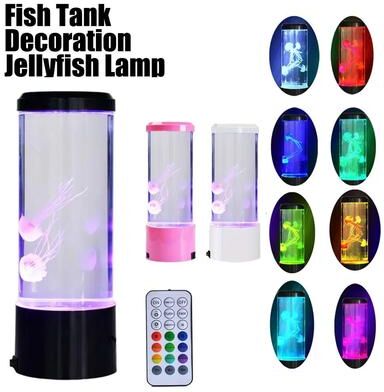
Similar search terms for Jellyfish
Top-Angebote
Products related to Jellyfish:
-
HomeDecorAndMore LLC Real Life Jellyfish Aquarium Lamp Real Life Jellyfish Aquarium LampIt’s quite hard not to like this aquarium jellyfish lamp! It imitates the serene underwater environment where the jellyfish floats freely in the blue water. It phases through 7 different colors. It fills the room with a pacifying ambiance. It is...45,97 $*Shipping: 0,00 $Secure redirect to the provider
-
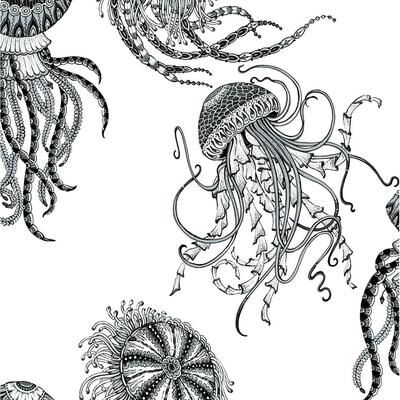
Perfect Picks Market Jellyfish Bear Slow Rising Squishy Stress Relief Sensory Toy cute JellyfishBring a little calm and playful comfort to busy moments with this adorable slow rising squishy. Designed in cute jellyfish and bear styles it offers a soft squeezable feel that makes fidgeting more satisfying. The stress relief toy slowly rebounds...44,97 $*Shipping: 0,00 $Secure redirect to the provider
-
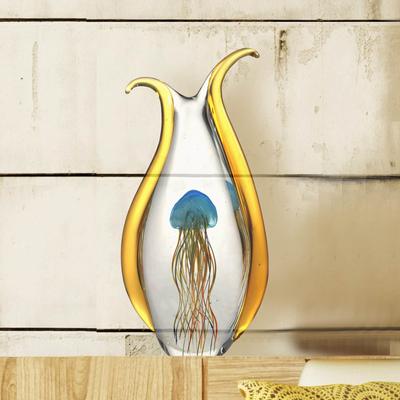
Dale Tiffany Jellyfish Handcrafted Art Glass FigurineL.C. Tiffany was well known for taking inspiration for his designs from things found in nature. Our artisans have recaptured Tiffany's love of nature in this breathtaking Jellyfish Figurine.96,19 $*Shipping: 0,00 $Secure redirect to the provider


-
What do jellyfish do?
Jellyfish are marine animals that drift along in the ocean currents. They use their tentacles to capture prey, such as small fish and plankton. Jellyfish also have the ability to sting, which they use for self-defense and to immobilize their prey. Some jellyfish can pulsate their bell-shaped bodies to propel themselves through the water, while others simply float along with the currents. **
-
Can you touch jellyfish?
It is not recommended to touch jellyfish as many species have stinging cells that can cause painful reactions or even be dangerous to humans. Even jellyfish that are dead or washed up on shore can still have active stingers. It is best to observe jellyfish from a safe distance to avoid any potential harm. **
-
Can jellyfish feel pain?
Jellyfish do not have a centralized nervous system or brain, so they do not experience pain in the same way that humans or other animals with more complex nervous systems do. While they do have nerve cells, they lack the structures necessary to process pain signals. Therefore, it is believed that jellyfish do not feel pain as we understand it. **
-
Which species of jellyfish?
There are many species of jellyfish found in oceans around the world, with some of the most common being the moon jellyfish (Aurelia aurita), the lion's mane jellyfish (Cyanea capillata), and the box jellyfish (Chironex fleckeri). Each species has its own unique characteristics, such as size, color, and venom potency. It is important to be cautious around jellyfish, as some species can deliver painful stings that may require medical attention. **


Why are there jellyfish?
Jellyfish have been around for millions of years and play an important role in marine ecosystems. They are a key part of the ocean food web, serving as both predator and prey. Their gelatinous bodies provide a food source for many marine animals, and they help to control populations of zooplankton. Additionally, jellyfish are well-adapted to survive in a wide range of ocean conditions, allowing them to thrive in various marine environments around the world. Overall, jellyfish are an integral part of the ocean ecosystem and have evolved to fulfill important ecological roles. **
Do jellyfish feel pain?
Jellyfish do not have a centralized nervous system like humans, so they do not have the same capacity to feel pain. They lack a brain and instead have a nerve net that allows them to sense their environment and respond to stimuli. While they may react to physical stimuli like touch or temperature changes, it is not considered the same as experiencing pain as humans do. **
Top-Angebote
Products related to Jellyfish:
-
HomeDecorAndMore LLC LED Jellyfish Mood Lamp LED Jellyfish Mood LampWant to surround yourself with aquatic life but can't afford to buy an aquarium or have the time to care for the fish in it So get this jellyfish mood lamp and not just fill your surrounding with colorful lights but also witness realistic jellyfish...54,97 $*Shipping: 0,00 $Secure redirect to the provider
-
Uplift Essentials Floating Jellyfish Sensory Mood Lamp Floating Jellyfish Sensory Mood LampDive into a world of tranquility with the Floating Jellyfish Sensory Mood Lamp, a mesmerizing centerpiece designed to bring the calming depths of the ocean into your living space. This highdefinition aquarium uses advanced fluid dynamics to create a...72,97 $*Shipping: 0,00 $Secure redirect to the provider
-
HomeDecorAndMore LLC Real Life Jellyfish Aquarium Lamp Real Life Jellyfish Aquarium LampIt’s quite hard not to like this aquarium jellyfish lamp! It imitates the serene underwater environment where the jellyfish floats freely in the blue water. It phases through 7 different colors. It fills the room with a pacifying ambiance. It is...45,97 $*Shipping: 0,00 $Secure redirect to the provider
-
Perfect Picks Market Jellyfish Bear Slow Rising Squishy Stress Relief Sensory Toy cute JellyfishBring a little calm and playful comfort to busy moments with this adorable slow rising squishy. Designed in cute jellyfish and bear styles it offers a soft squeezable feel that makes fidgeting more satisfying. The stress relief toy slowly rebounds...44,97 $*Shipping: 0,00 $Secure redirect to the provider
-
What kind of jellyfish is the fried egg jellyfish?
The fried egg jellyfish, also known as Phacellophora camtschatica, is a species of jellyfish that is easily recognizable by its large, flat, disk-shaped bell that resembles a fried egg. It is typically found in the cold waters of the Pacific Ocean, particularly along the coasts of North America and Asia. Despite its striking appearance, the fried egg jellyfish is not considered to be a significant threat to humans as its sting is mild and not harmful. **
-
Which exotic jellyfish?
The box jellyfish is considered one of the most exotic jellyfish due to its extremely venomous sting and unique appearance. This jellyfish is known for its cube-shaped bell and long, trailing tentacles that can deliver a powerful and potentially deadly sting to humans. Found primarily in the waters of the Indo-Pacific region, the box jellyfish is a fascinating yet dangerous creature that requires caution and respect when encountered. **
-
What do jellyfish do?
Jellyfish are marine animals that drift along in the ocean currents. They use their tentacles to capture prey, such as small fish and plankton. Jellyfish also have the ability to sting, which they use for self-defense and to immobilize their prey. Some jellyfish can pulsate their bell-shaped bodies to propel themselves through the water, while others simply float along with the currents. **
-
Can you touch jellyfish?
It is not recommended to touch jellyfish as many species have stinging cells that can cause painful reactions or even be dangerous to humans. Even jellyfish that are dead or washed up on shore can still have active stingers. It is best to observe jellyfish from a safe distance to avoid any potential harm. **
Similar search terms for Jellyfish
-
Dale Tiffany Jellyfish Handcrafted Art Glass FigurineL.C. Tiffany was well known for taking inspiration for his designs from things found in nature. Our artisans have recaptured Tiffany's love of nature in this breathtaking Jellyfish Figurine.96,19 $*Shipping: 0,00 $Secure redirect to the provider
-
Inspire Essentials Stretchy Jellyfish Squishy Toy aAdd a little ocean inspired fun to your day with this soft and playful jellyfish squishy toy. Made from flexible TPR material, it can be squeezed and stretched for a satisfying hands on sensory experience. This stretchy sensory toy is compact enough...35,00 $*Shipping: 0,00 $Secure redirect to the provider
-
Can jellyfish feel pain?
Jellyfish do not have a centralized nervous system or brain, so they do not experience pain in the same way that humans or other animals with more complex nervous systems do. While they do have nerve cells, they lack the structures necessary to process pain signals. Therefore, it is believed that jellyfish do not feel pain as we understand it. **
-
Which species of jellyfish?
There are many species of jellyfish found in oceans around the world, with some of the most common being the moon jellyfish (Aurelia aurita), the lion's mane jellyfish (Cyanea capillata), and the box jellyfish (Chironex fleckeri). Each species has its own unique characteristics, such as size, color, and venom potency. It is important to be cautious around jellyfish, as some species can deliver painful stings that may require medical attention. **
-
Why are there jellyfish?
Jellyfish have been around for millions of years and play an important role in marine ecosystems. They are a key part of the ocean food web, serving as both predator and prey. Their gelatinous bodies provide a food source for many marine animals, and they help to control populations of zooplankton. Additionally, jellyfish are well-adapted to survive in a wide range of ocean conditions, allowing them to thrive in various marine environments around the world. Overall, jellyfish are an integral part of the ocean ecosystem and have evolved to fulfill important ecological roles. **
-
Do jellyfish feel pain?
Jellyfish do not have a centralized nervous system like humans, so they do not have the same capacity to feel pain. They lack a brain and instead have a nerve net that allows them to sense their environment and respond to stimuli. While they may react to physical stimuli like touch or temperature changes, it is not considered the same as experiencing pain as humans do. **
* All prices are inclusive of VAT and, if applicable, plus shipping costs. The offer information is based on the details provided by the respective shop and is updated through automated processes. Real-time updates do not occur, so deviations can occur in individual cases. ** Note: Parts of this content were created by AI.